

Viscosupplementation is a minimally invasive treatment for knee osteoarthritis that can reduce pain and help you move more comfortably. Below we explain how the treatment works, who is most likely to benefit, what to expect during and after the procedure, and how it compares with other non‑surgical options. We also describe how Rogers Regenerative Medical Group (RRMG) delivers this therapy with experienced, patient‑focused care.
What is viscosupplementation and how does it ease knee osteoarthritis pain?
Viscosupplementation involves injecting hyaluronic acid into the knee joint to restore the joint fluid’s natural thickness and elasticity. That restored viscoelasticity improves lubrication and shock absorption inside the joint, which can reduce pain and make day‑to‑day movement easier for people with osteoarthritis.
How hyaluronic acid injections improve joint lubrication and shock absorption
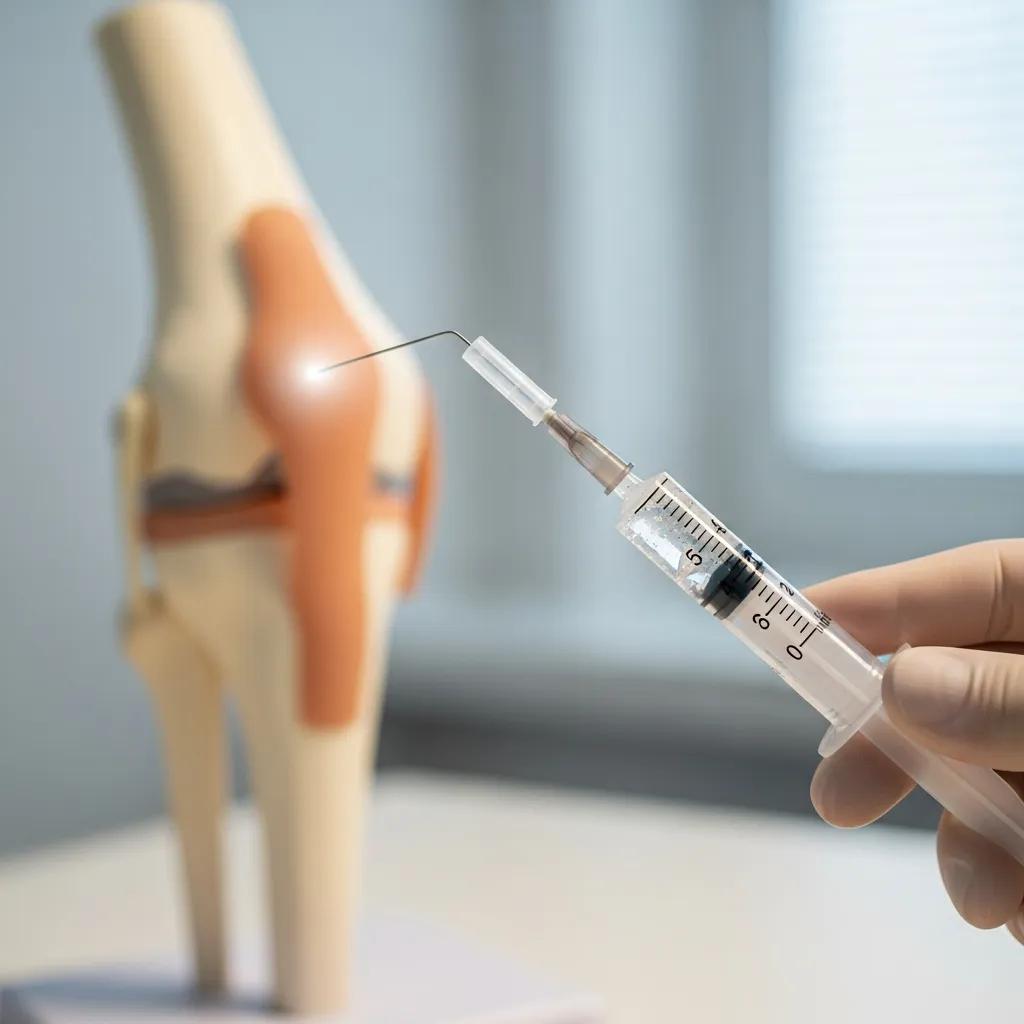
Hyaluronic acid is a component of healthy synovial fluid. When we inject it into the knee, it increases fluid viscosity, reducing friction between joint surfaces and helping the joint glide more smoothly. That improved lubrication can ease pain during walking, climbing stairs and other everyday activities.
Benefits and mechanism of viscosupplementation for knee pain
Beyond short‑term pain relief, viscosupplementation can improve joint function and mobility, helping many patients return to activities they value. The primary mechanism is mechanical—restoring cushioning and lubrication—but improved joint mechanics may also support a healthier local environment by helping tissues move and receive nutrients more effectively.
Who is a suitable candidate for viscosupplementation knee injections in the UK?
Viscosupplementation suits many patients with symptomatic knee osteoarthritis, especially those who want a non‑surgical option or who have not gained sufficient relief from conservative measures. Determining suitability requires a personalised assessment.
Eligibility criteria for non‑surgical knee arthritis treatment
- Experiencing mild to moderate knee pain caused by osteoarthritis.
- Not getting adequate relief from conservative care such as physiotherapy or oral pain relief.
- Wanting to avoid or postpone surgical options, or not being a surgical candidate.
How RRMG assesses patients for hyaluronic acid knee pain relief
At Rogers Regenerative Medical Group we take a thorough approach to assessment. Our pathway typically includes:
- An initial consultation to review your symptoms, goals and medical history.
- Diagnostic imaging (X‑ray or MRI where appropriate) to understand the degree of joint change.
- A review of prior treatments and their outcomes so we can personalise the plan for you.
What to expect during and after the viscosupplementation procedure
The procedure is usually performed in an outpatient setting and is minimally invasive. Most patients tolerate it well and recover quickly, but knowing the process helps set realistic expectations.
How ultrasound guidance ensures precise knee joint injections
We commonly use ultrasound to guide injections. Real‑time imaging improves accuracy, reduces the chance of misplaced injections, and generally means less discomfort and better delivery of the hyaluronic acid into the intended joint space.
Recovery timeline and post‑injection care for knee arthritis

Recovery is typically straightforward. Most people can return to light activity within a day or two, though some soreness or mild swelling at the injection site is possible.
Post‑injection care usually includes:
- Rest the knee for 24–48 hours where possible.
- Use ice to control swelling and discomfort.
- Gradually resume normal activities as symptoms allow.
How does viscosupplementation compare with other non‑surgical knee arthritis treatments?
Viscosupplementation is one option among several non‑surgical treatments. Understanding the differences helps you and your clinician choose the most appropriate approach for your situation.
Differences between hyaluronic acid injections, PRP and steroid injections
Each injection type has a different purpose and expected effect:
- Hyaluronic acid injections: Aim to restore joint lubrication and cushioning to reduce pain and improve function.
- PRP injections: Use components of your own blood to modulate inflammation and encourage tissue repair.
- Steroid injections: Deliver strong short‑term anti‑inflammatory effect and rapid pain relief but are typically used sparingly due to potential side effects.
Which treatment delivers the best pain relief and mobility improvement?
Effectiveness varies between individuals. Many patients find viscosupplementation provides a favourable balance of symptom relief and durability without the systemic effects of steroids. The choice depends on factors such as the stage of arthritis, previous treatments and personal goals.
Expected outcomes, side effects and long‑term benefits of viscosupplementation
Knowing likely outcomes and risks helps set realistic expectations and supports shared decision‑making.
How long does pain relief last after joint fluid injections for knee arthritis?
Pain relief from viscosupplementation commonly lasts several months and can extend up to six months in many patients, though individual responses differ. Some patients experience meaningful functional improvement throughout that period.
Potential side effects and how RRMG follows NICE guidance
Viscosupplementation is generally well tolerated. Mild side effects can include temporary swelling, local discomfort or a brief flare of pain. At RRMG we follow NICE guidance and evidence‑based protocols to maximise safety and outcomes. Our team provides close follow‑up and clear aftercare instructions to manage any post‑treatment concerns.
Why choose Rogers Regenerative Medical Group for your knee osteoarthritis care?
Selecting the right clinic matters. RRMG combines clinical expertise with a patient‑centred approach to help you achieve practical, long‑term improvements in knee health.
How Dr Ralph Rogers’ experience improves viscosupplementation outcomes
Dr Ralph Rogers brings over 25 years’ experience in regenerative orthopaedics and sports medicine. His qualifications (MD, PhD and an MSc in Musculoskeletal Ultrasound) and clinical experience allow us to offer advanced techniques, precise ultrasound‑guided injections and tailored treatment plans that reflect each patient’s needs.
What patients say about non‑surgical knee pain relief at RRMG
Patients commonly report reduced pain, easier movement and a faster return to everyday activities. Testimonials frequently highlight compassionate care, clear explanations and thorough assessments—factors that help patients feel confident in their treatment choices.
| Treatment Type | Mechanism | Expected Outcome |
|---|---|---|
| Viscosupplementation | Restores joint lubrication and cushioning | Pain reduction and improved mobility over months |
| PRP Injections | Uses the patient’s blood to support healing | Reduced inflammation and potential tissue repair |
| Steroid Injections | Powerful anti‑inflammatory effect | Rapid short‑term pain relief; limited duration |
Conclusion
Viscosupplementation is a well‑established, non‑surgical option that can meaningfully reduce pain and improve knee function for many people living with osteoarthritis. By restoring joint lubrication and cushioning, it helps patients move with less discomfort and greater confidence. If you’re considering non‑surgical knee care, speak with Rogers Regenerative Medical Group to explore whether viscosupplementation fits your goals and treatment plan—book a consultation to take the next step toward improved mobility.
Stress is a normal part of life. I get stressed, you get stressed, we all get stressed! Throughout life, stress is brought on by many
Lorem Ipsum available, but the majority have suffered alteration in some form If you are going to use a passage of Lorem Ipsum, you need