Quick Email Now!

-
-
Company Location
UK
-
Phone Number
0207 112 5400
Quick Email Now!
Company Location
Phone Number
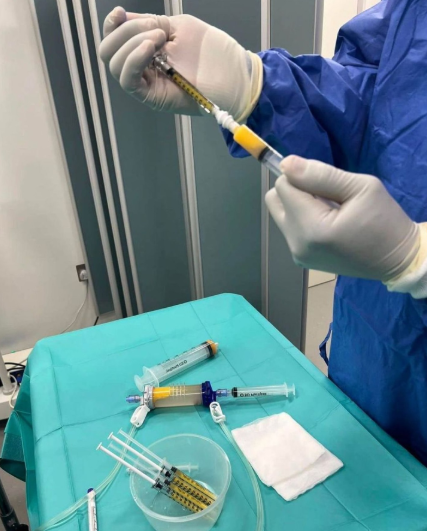
Minimally Invasive Treatment for Persistent Tendon Problems
Tenex® is a minimally invasive procedure designed for selected chronic tendon conditions that have not responded adequately to conservative treatment.
The procedure uses specialised ultrasonic technology to target and remove selected abnormal or damaged tendon tissue. The aim is to treat the affected area while helping preserve surrounding healthy tissue.
Tenex® may be considered for certain tendon problems affecting areas such as the elbow, shoulder, knee, Achilles tendon and plantar fascia.
The procedure is ultrasound-guided and is typically performed under local anaesthetic. Whether Tenex® is appropriate depends on your diagnosis, symptoms, imaging and individual circumstances.
Tenex® is a minimally invasive treatment for selected chronic tendon conditions.
Unlike traditional open surgery, the procedure uses a small access point and specialised ultrasonic technology. The clinician uses ultrasound to identify the affected tendon tissue and carefully directs the Tenex® device towards the treatment area.
The ultrasonic technology is designed to break down and remove selected abnormal or damaged tissue.
Tenex® is not suitable for every tendon condition. A detailed clinical assessment is needed to determine whether the procedure is appropriate for you.

If you are looking for a non-surgical option for a suitable joint, tendon or soft-tissue problem, PRP may be worth discussing with a specialist.
Tenex® is performed through a small access point rather than traditional open surgery.
Ultrasound allows the clinician to visualise the tendon and guide the treatment towards the intended area.
The procedure is designed to target selected abnormal or damaged tendon tissue.
The treatment aims to focus on the affected tissue while limiting disruption to surrounding healthy structures.
Tenex® is typically performed using local anaesthetic, depending on your individual circumstances.
The procedure is designed specifically for selected chronic tendon conditions rather than generalised joint pain.
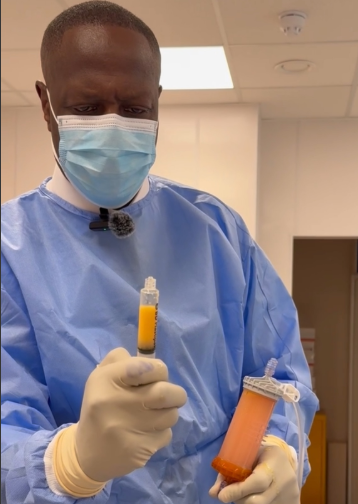
Tenex® may be considered for selected chronic tendon and soft-tissue conditions affecting areas such as:
The suitability of Tenex® depends on the specific tendon involved, the severity and duration of your symptoms, and the findings from your clinical assessment and imaging.
Your symptoms, medical history and previous treatments are reviewed to determine whether Tenex® may be suitable.
Ultrasound and other relevant imaging may be used to identify the affected tendon tissue and understand the extent of the problem.
The clinician uses ultrasound to locate the abnormal or damaged tissue that may be contributing to your symptoms.
The treatment area is numbed with local anaesthetic to help keep you comfortable during the procedure.
A small access point is made, and the Tenex® device is carefully guided towards the selected treatment area under ultrasound guidance.
Specialised ultrasonic technology is used to target and remove selected abnormal or damaged tendon tissue.
You will receive personalised advice about activity, rehabilitation and the gradual return to normal movement.
Depending on your condition, Tenex® may offer:
Individual outcomes vary, and Tenex® is not suitable for every tendon condition or patient.
Tenex® may be considered when a chronic tendon problem continues to cause pain or limit movement despite appropriate non-surgical treatment.
Your clinician may consider:
A detailed assessment helps determine whether Tenex® is an appropriate treatment option.
After the procedure, you will receive specific aftercare and rehabilitation advice.
Some soreness or discomfort around the treatment area can occur during the early recovery period. Your clinician will explain what to expect and how quickly you should increase your activity.
A gradual rehabilitation programme may be recommended to support your return to normal movement and activity.
The recovery period varies depending on the tendon treated, the extent of the condition and your individual circumstances.
Persistent tendon pain can affect movement, exercise, work and everyday activities. Understanding the cause of the problem is an important part of choosing the right treatment.
Our approach focuses on careful assessment and targeted treatment for appropriate patients. Tenex® may be considered when it fits your diagnosis and overall treatment plan.
If persistent tendon pain is affecting your movement or preventing you from returning to your normal activities, a clinical assessment can help determine your treatment options.
Book a consultation to discuss your tendon condition and whether Tenex® may be suitable for you.