Quick Email Now!
-
-
Company Location
UK
-
Phone Number
0207 112 5400
Quick Email Now!
Company Location
Phone Number
Targeted Treatment for Persistent Pain
Radiofrequency ablation (RFA) is a minimally invasive procedure that uses controlled radiofrequency energy to treat selected nerves linked to persistent pain.
It may be considered for certain chronic pain conditions, including appropriately diagnosed facet-related spinal pain, sacroiliac joint pain and selected knee or shoulder pain.
The procedure uses imaging guidance to help your clinician identify the treatment area and accurately position the treatment equipment.
Radiofrequency ablation is not suitable for every type of pain. Your condition will be carefully assessed before treatment to determine whether RFA may be an appropriate option for you.
Radiofrequency ablation is a procedure used to target selected nerves that may be involved in ongoing pain.
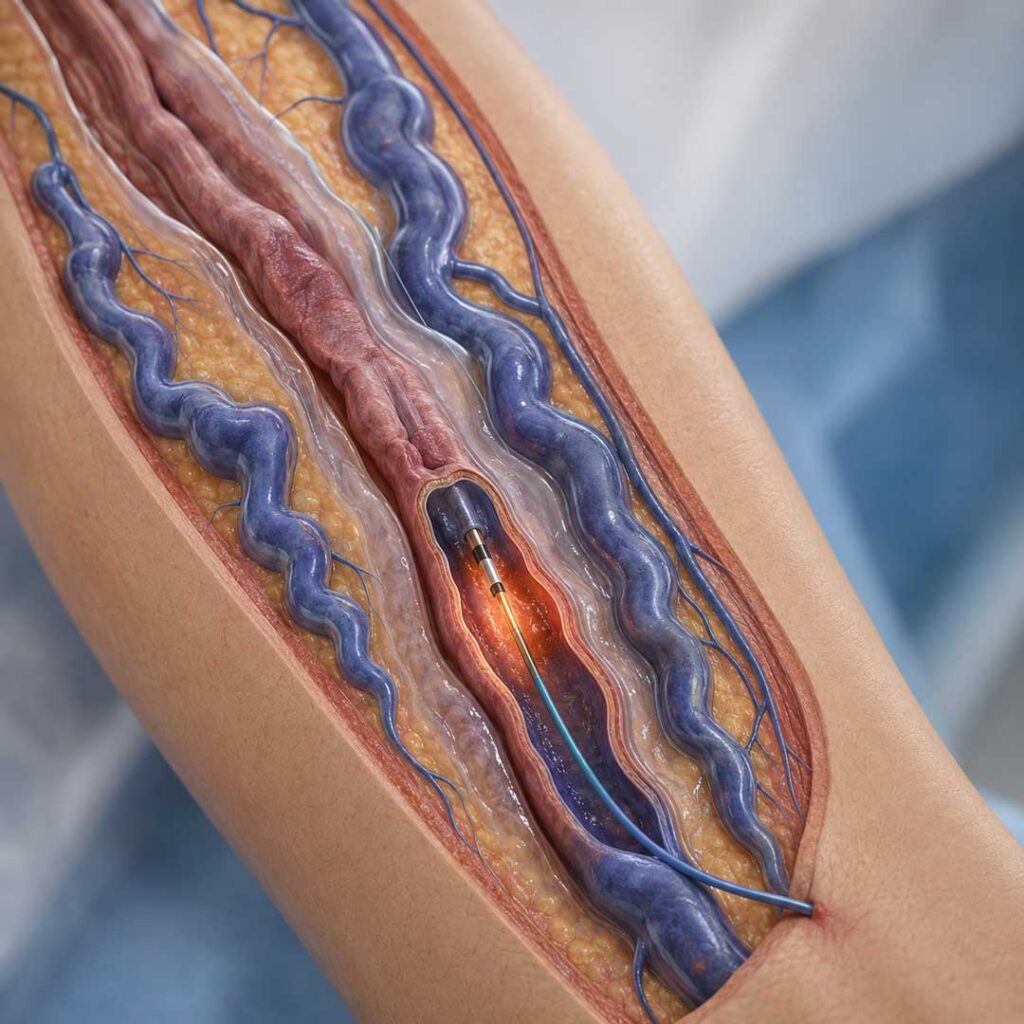
During the procedure, controlled radiofrequency energy is delivered through a specialised treatment needle to the selected nerve or nerves. The aim is to reduce the nerve’s ability to transmit pain signals from the treated area.
The procedure is performed with imaging guidance to help your clinician accurately identify the treatment area.
RFA may be considered when a specific source of chronic pain has been identified and other treatment options have not provided enough benefit.
Living with persistent pain can affect your movement, work, sleep and everyday activities. For selected patients, RFA may provide another non-surgical treatment option.
RFA is performed through a specialised needle rather than traditional open surgery.
The procedure focuses on specific nerves that are associated with the patient's pain. This allows treatment to be directed towards an identified pain source.
Imaging guidance is used during the procedure to help your clinician identify the treatment area and position the equipment accurately.
RFA may be considered for selected chronic pain conditions where a suitable source of pain has been identified.
Where appropriate, the procedure can be performed using local anaesthetic. Your clinician will discuss the anaesthetic approach with you before treatment.
RFA provides a minimally invasive alternative to traditional surgery for selected chronic pain conditions.
RFA may be considered for appropriately diagnosed cases of:
RFA is not suitable for every cause of pain. A detailed assessment is needed to identify whether the pain is coming from a structure that may be appropriate for this type of treatment.
The procedure involves several carefully controlled steps.
Your clinician will review your symptoms, medical history and previous treatment. The source of your pain will be assessed to determine whether RFA may be appropriate.
Imaging is used to help locate the relevant structures and selected nerves associated with your pain.
A specialised needle is carefully guided towards the selected treatment area using imaging guidance.
Controlled radiofrequency energy is delivered through the needle to the selected nerve.
Once the procedure is complete, your clinician will provide advice about what to expect and how to manage your activity during recovery.
For suitable patients, radiofrequency ablation may offer several advantages as part of a non-surgical approach to selected chronic pain.
Potential benefits include:
The response to RFA can vary from person to person. Your clinician will discuss the potential benefits, limitations and expected outcomes based on your individual condition.
RFA is not suitable for every patient or every type of chronic pain.
Your clinician will consider factors such as the source and location of your pain, your symptoms, medical history and previous treatments.
A detailed assessment helps determine whether the pain is coming from a structure that may respond to this type of treatment.
If RFA is not appropriate, your clinician can discuss other treatment options that may be better suited to your condition.
Your clinician will provide personalised aftercare advice following the procedure.
Recovery can vary depending on the area treated and your individual circumstances. You may be advised to limit certain activities for a period after treatment before gradually returning to your normal routine.
Your clinician will explain what to expect and when you should seek further advice if needed.
Radiofrequency ablation is one of several minimally invasive treatments that may be considered for selected chronic pain conditions.
Depending on your diagnosis, other treatment options may include injections, physiotherapy, exercise-based treatment or other non-surgical approaches.
The aim is to understand the source of your pain and choose a treatment plan that is appropriate for your individual needs.
If persistent pain is affecting your movement or everyday life, a specialist assessment can help you understand your treatment options.
Your clinician can review your symptoms, assess the likely source of your pain and determine whether radiofrequency ablation may be suitable for you.