Quick Email Now!
-
-
Company Location
UK
-
Phone Number
0207 112 5400
Quick Email Now!
Company Location
Phone Number

Targeted Treatment for Lower Back & Leg Pain
Lower back pain can have many different causes, including problems affecting the spinal joints, nerves or surrounding tissues. When pain continues despite conservative treatment, a spinal injection may be considered as part of your assessment and treatment plan.
Lower back spinal injections are targeted procedures used for selected spinal conditions. Depending on the suspected source of your symptoms, treatment may include an epidural injection, transforaminal injection, medial branch block or another image-guided spinal procedure.
The most appropriate treatment depends on your symptoms, diagnosis, medical history and clinical assessment.
Lower back spinal injections are minimally invasive procedures used to deliver medication to a specific area of the spine.
The type of injection depends on where your pain is coming from. Some injections are used around irritated spinal nerves, while others may target small joints or specific structures associated with back pain.
Where appropriate, imaging guidance can help the clinician identify the treatment area and accurately position the needle.
Spinal injections are not suitable for every patient or every type of back pain. A careful assessment is needed before treatment.

The injection is directed towards a specific area that may be contributing to your symptoms.
Imaging guidance may be used to help identify the relevant spinal structures and guide the injection accurately.
Spinal injections are performed through a small needle rather than traditional open surgery.
Depending on the diagnosis, an injection may be used to help manage pain and inflammation affecting the lower back or leg.
There are several types of spinal injections. Your clinician can recommend the most appropriate option based on your symptoms and diagnosis.
An injection may be used alongside other approaches such as physiotherapy, exercise, activity modification or other non-surgical treatments.
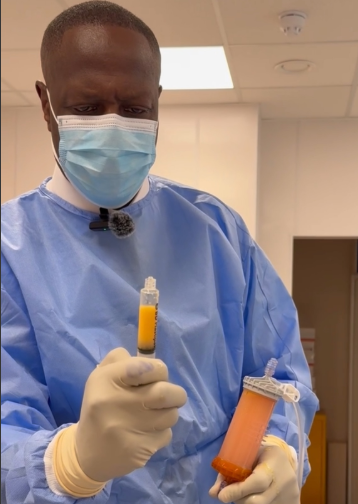
Lower back spinal injections may be considered for selected conditions affecting the spine and surrounding structures.
These may include:
The right treatment depends on the cause of your symptoms. Not all lower back pain requires an injection.
An epidural injection delivers medication into the epidural space around the spinal nerves. It may be considered for selected cases of lower back and leg pain.
A transforaminal injection targets an area close to a specific spinal nerve as it leaves the spine. This may be considered when symptoms suggest irritation of a particular nerve.
Medial branch blocks target small nerves that supply the facet joints of the spine. They may be used when facet joint pain is suspected and can also form part of the assessment for certain patients being considered for radiofrequency treatment.
Depending on your diagnosis, other image-guided spinal procedures may be considered. Your clinician will explain which option is most appropriate for your symptoms.
Your symptoms, medical history and previous treatments are reviewed to understand the possible source of your pain.
A clinical assessment may be combined with relevant imaging to identify the structures that may be contributing to your symptoms.
The type and location of the injection will depend on your diagnosis and the suspected pain source.
Imaging guidance may be used to help identify the relevant spinal structures and guide the needle towards the intended area.
The selected medication is carefully delivered to the treatment area.
You will be given guidance on what to expect after the procedure and when to gradually return to your usual activities.
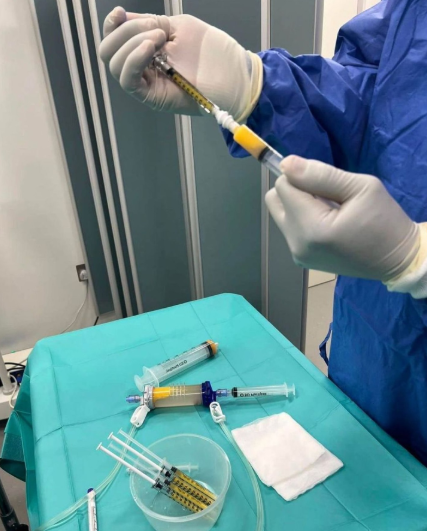
Depending on your condition, a lower back spinal injection may offer:
The response to spinal injections varies between patients. An injection is not a guaranteed solution and may not be appropriate for every cause of back pain.
A spinal injection may be considered when your symptoms and clinical findings suggest that a particular spinal structure may be contributing to your pain.
Before treatment, your clinician will consider:
This assessment helps ensure that treatment is selected for the right clinical situation.
After the procedure, you will receive specific aftercare instructions.
Some patients may experience temporary soreness or changes in their symptoms around the injection site. Your clinician will explain what to expect and when you can return to normal activities.
You may also be advised to continue with other parts of your treatment plan, such as exercise or physiotherapy.
If you develop unexpected or concerning symptoms after treatment, you should seek appropriate medical advice.
Lower back pain is not the same for everyone. The most effective approach depends on understanding what may be causing your symptoms.
Our approach focuses on careful assessment, accurate diagnosis and targeted non-surgical treatment where appropriate. Spinal injections are considered as part of an individual treatment plan rather than as a one-size-fits-all solution.
If persistent lower back or leg pain is affecting your movement, work, sleep or daily life, a clinical assessment can help determine the most appropriate next step.
Book a consultation to discuss your symptoms and whether a targeted spinal injection may be suitable for you.